Not on sale yet. We are testing it with readers first.
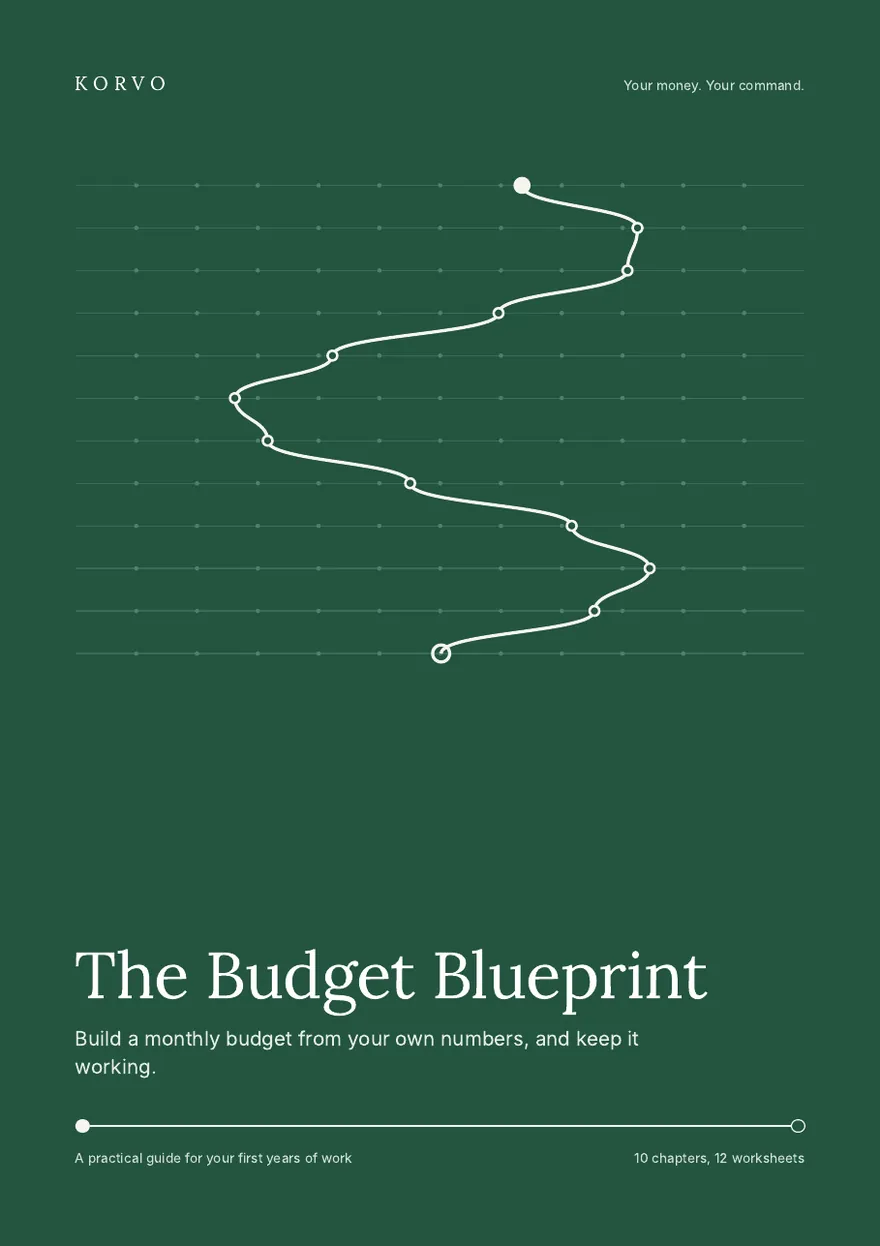
The Budget Blueprint
Build a monthly budget from your own numbers, and keep it working. A practical guide for people in their first years of work.
- 10short chapters
- 15illustrated pages
- 12printable worksheets
By the last page, you will have
- A clear figure for your real take-home income.
- A record of where your money actually went.
- A written monthly budget with limits based on your own spending.
- A savings line you can keep up, plus a small allowance for unexpected costs.
- A weekly check-in and a monthly review, booked in your calendar.
- A 30, 60 and 90-day plan for sticking with it.
A look inside
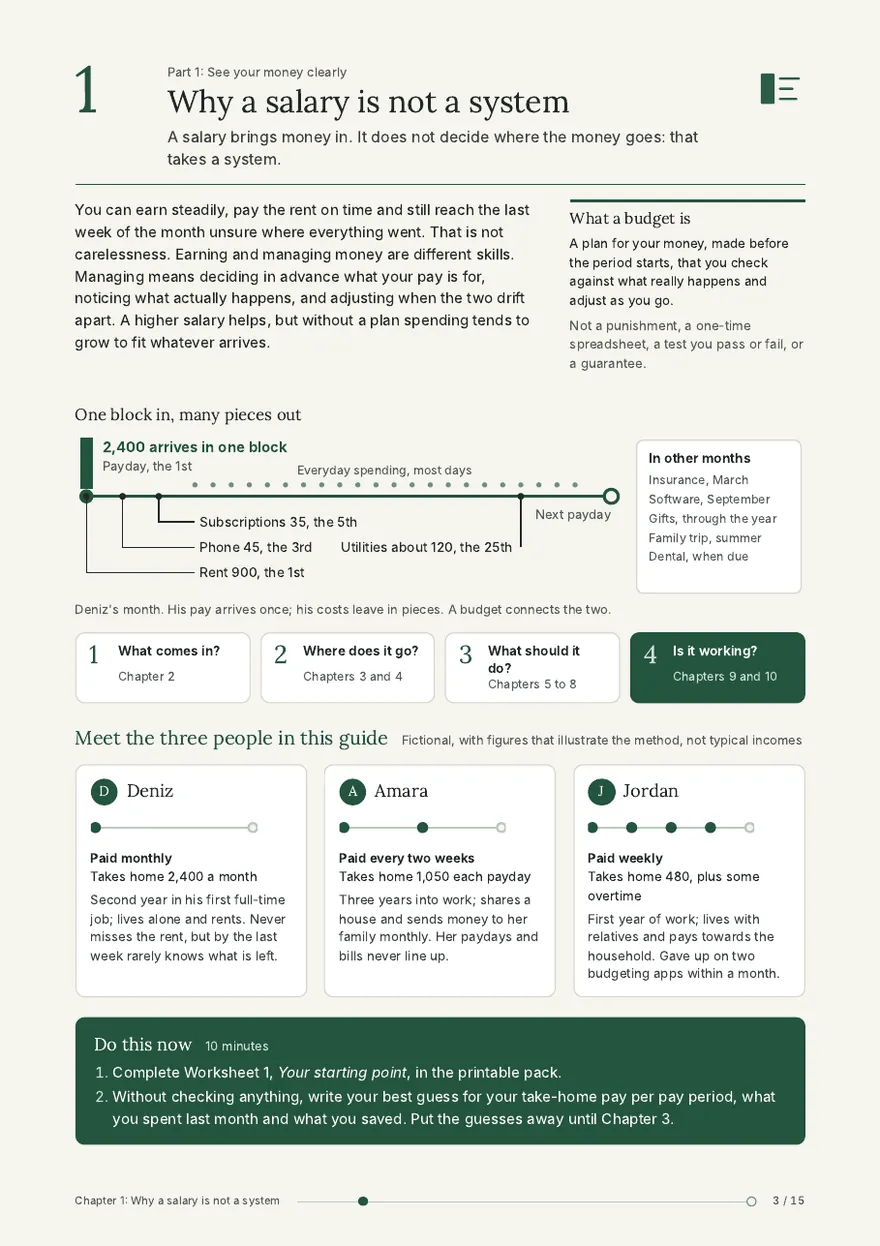
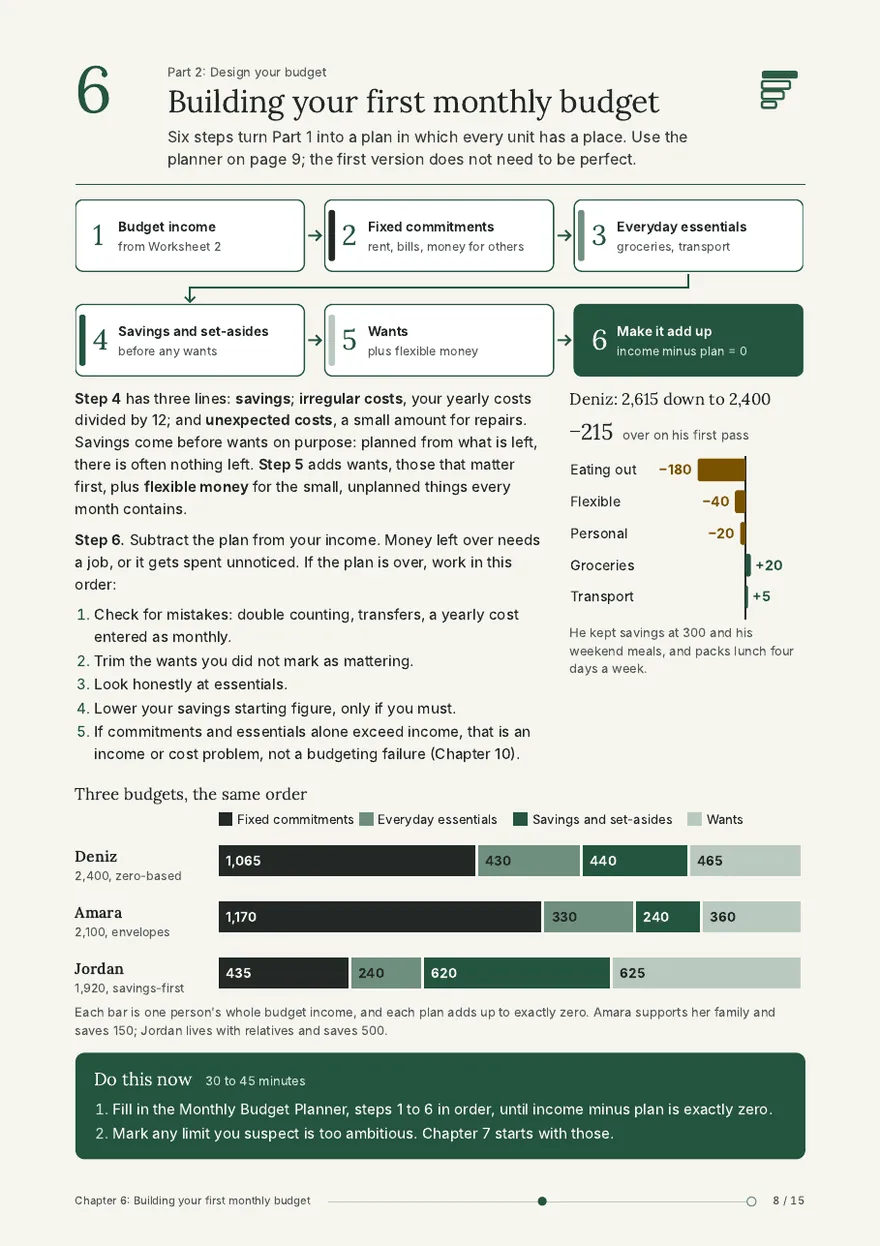
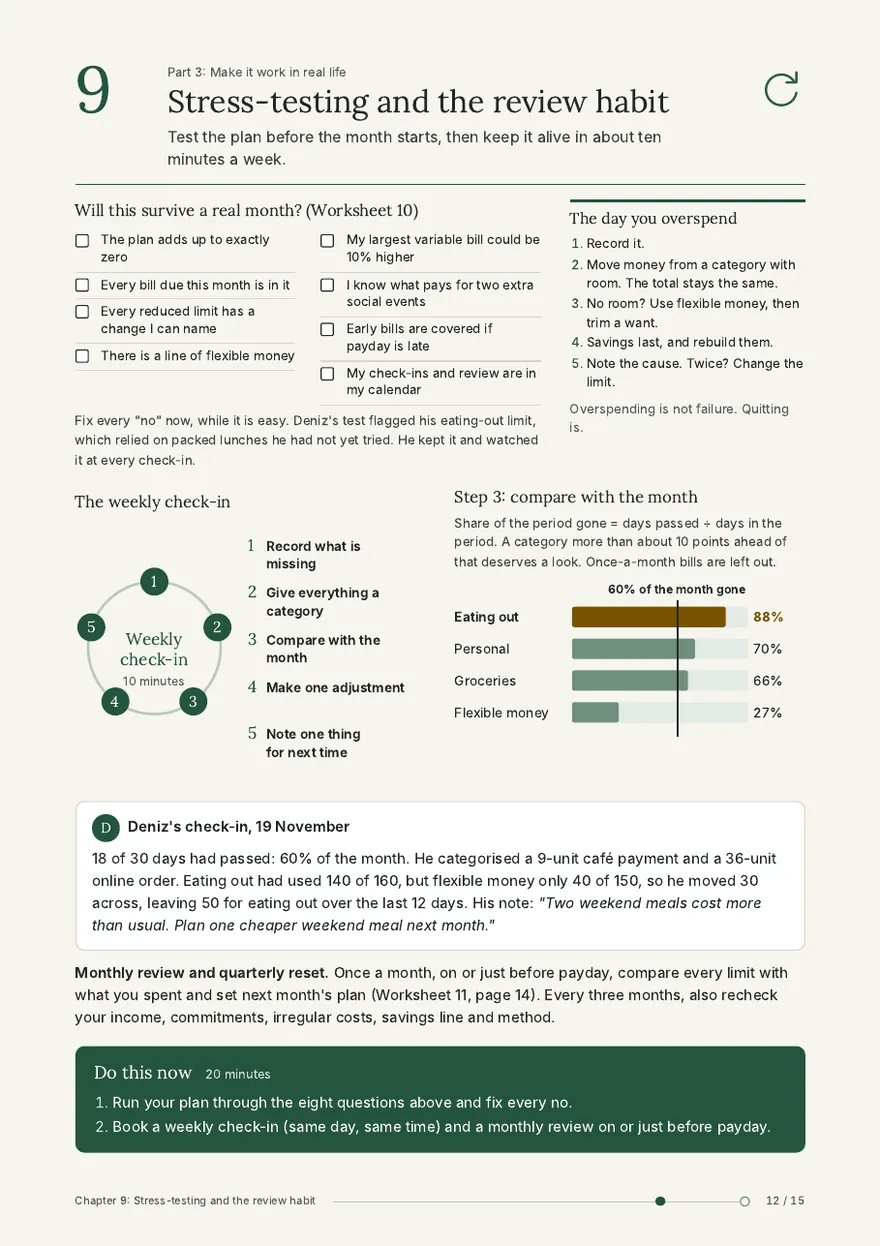
Every chapter ends in a short exercise, and every example uses arithmetic you can check. Charts and worksheets do the explaining where words would take longer.
Contents
Plus a glossary, the sources the guide relies on, and a separate printable pack with all 12 worksheets at full size.
Part 1
See your money clearly
- 1Why a salary is not a system
- 2Your real income
- 3Where your money actually goes
- 4Your commitments and priorities
Part 2
Design your budget
- 5Choosing a budgeting method
- 6Building your first monthly budget
- 7Setting realistic category limits
- 8Making savings part of the budget
Part 3
Make it work in real life
- 9Stress-testing and the review habit
- 10When the budget breaks, and your first 90 days
Who it is for
People paid a regular wage or salary, weekly, every two weeks or monthly, who want a reliable way to manage it. The examples use a neutral unit, so you read every amount in your own currency.
What it does not cover
Investing, tax, choosing financial products and strategies for repaying debt. It is general education, not personalised advice, and it never recommends specific banks, apps or products.
Help us test it
Before the guide goes on sale, we want to know whether it works for real readers: what was clear, what was not, and whether the exercises were worth the time. There is no price yet.
Email wearkorvo@gmail.com to take part.